


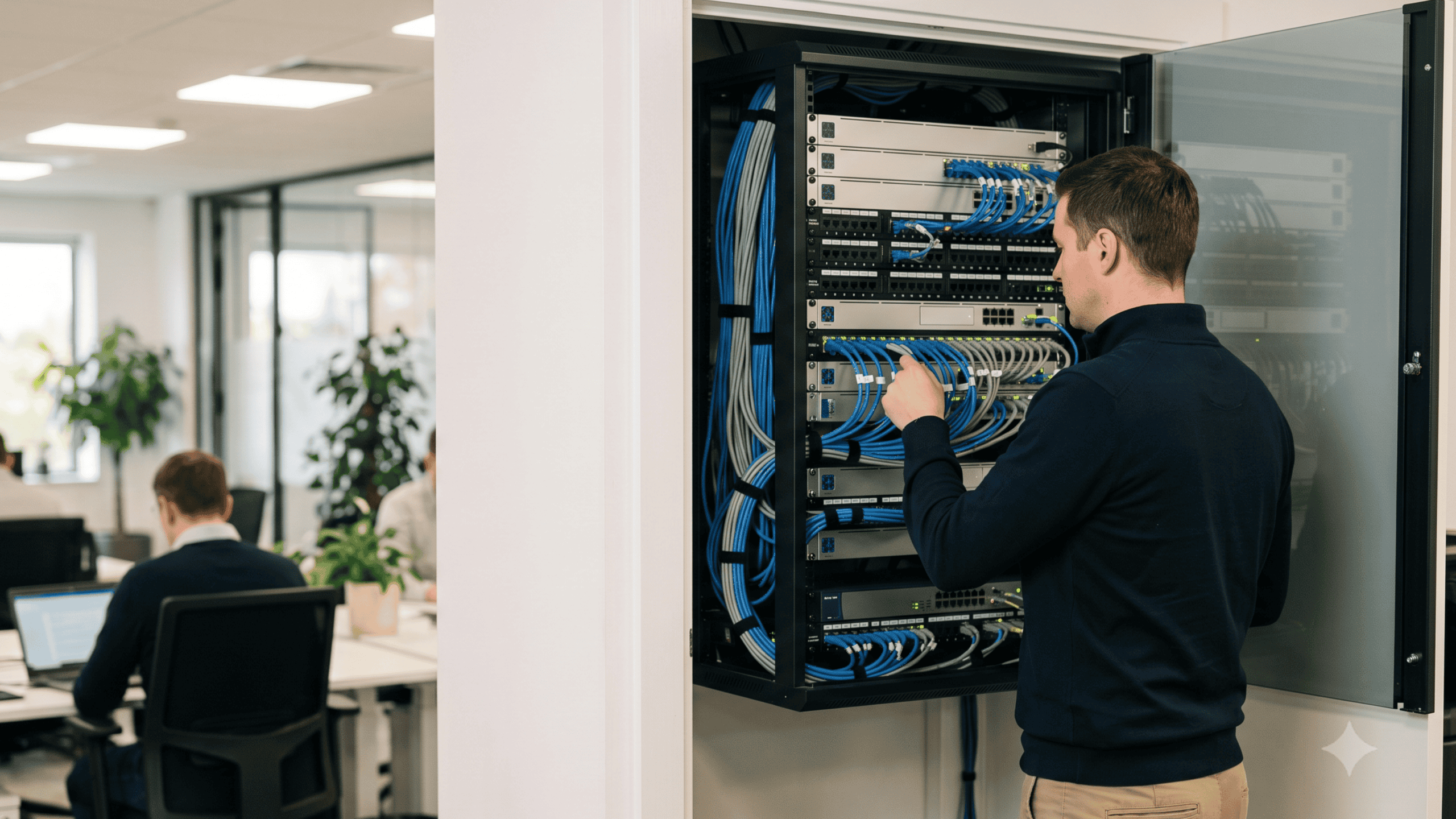
Many business leaders think of information security as protecting data, including passwords, customer records, and financial files. Infrastructure protection sounds like a separate job focused on servers, networks, and equipment. In practice, the two can’t be separated, and treating them as different projects is one of the most common reasons organizations end up with security gaps they didn’t know existed.
So, how is infrastructure protection related to information security? Information security is the goal: keeping your information private, accurate, and available when your team needs it. Infrastructure protection is one of the main ways you reach that goal, because every piece of information your organization owns lives on, moves through, or depends on your infrastructure.
What Information Security Actually Covers
Information security is often described through three principles. Together, they explain what “secure” really means for an organization:
- Confidentiality: Only the right people can see sensitive information, whether that’s patient records, client files, or payroll data.
- Integrity: Information stays accurate and complete, and no one can change it without authorization.
- Availability: Your team can reach the information and systems they need, when they need them.
Most security conversations focus on the first principle. But a business that can’t access its systems for two days has an information security problem too, even if no data was ever stolen.
What Infrastructure Protection Means
Your IT infrastructure is everything that stores, processes, or carries your information. For most organizations, that includes servers and computers, network equipment like firewalls and switches, cloud environments and Microsoft 365, mobile devices, backup systems, and the physical spaces where equipment lives.
Protecting that infrastructure means keeping each part securely configured, updated, monitored, and recoverable. It’s less about any single product and more about the ongoing discipline of knowing what you have, how it’s set up, and what happens if something goes wrong.
How Is Infrastructure Protection Related to Information Security?
The clearest way to see the relationship is to map infrastructure protection back to each of the three principles above. Each depends on well-managed infrastructure.
Confidentiality depends on secure systems
Sensitive information is only as protected as the systems that hold it. An outdated server, a misconfigured firewall, or a laptop missing security updates can each create a path to data that your policies were meant to protect. Strong passwords and access rules matter, but they can’t compensate for the equipment underneath them.
Integrity depends on controlled systems
Keeping information accurate requires knowing who changed what, and when. That comes from infrastructure-level controls: user access management, activity logging, and consistent configuration standards. Without them, it’s difficult to confirm that your records are trustworthy, which matters a great deal during an audit or insurance review.
Availability is infrastructure
When a network goes down, or a server fails, the information on it becomes unusable, even if it’s perfectly safe. That’s why backup, disaster recovery, and proactive monitoring belong in any conversation about information security. Being able to restore systems and keep operating is part of protecting your information, not a separate concern.
Why Treating Them Separately Creates Gaps
When teams handle infrastructure and information security as separate efforts, they make decisions in isolation. A new system is installed to solve an operational need, and security is reviewed later, if at all. A data protection policy is written, but no one confirms that the underlying equipment can actually support it.
This is how organizations end up in a position where they “don’t know what they don’t know.”
A few common examples of this information gap:
- Security policies are documented, but older equipment still running on the network no longer receives updates.
- Data is backed up regularly, but no one has tested whether it can be restored.
- A compliance checklist is complete, but the controls behind it aren’t monitored day to day.
These situations don’t mean an organization has done something wrong. They simply reflect a gap between how security is planned and how infrastructure is run. Closing that gap is where real resilience comes from.
Learn More About ACC Technical Services IT Audits & Assessments
What a Connected Approach Looks Like
Established security frameworks treat infrastructure and information as one picture. The NIST Cybersecurity Framework organizes security around six functions: govern, identify, protect, detect, respond, and recover. Each one applies equally to your systems and the information on them.
The CIS Controls make the same point from a practical angle. Their first two controls focus on keeping an accurate inventory of hardware and software, because you can’t protect information on systems you don’t know about.
In day-to-day terms, a connected approach usually includes:
- Knowing what you have. A current inventory of devices, systems, cloud services, and where sensitive information lives.
- Setting secure standards. Consistent configurations so every system meets the same baseline.
- Staying current. Ongoing updates and vulnerability management, so known weaknesses are addressed on a schedule.
- Watching continuously. Monitoring that spots unusual activity early, before it affects operations.
- Planning for recovery. Tested backups, not just scheduled ones, and a clear plan to restore operations.
- Governing it all. Documented policies, regular reporting, and a technology roadmap tied to business goals.
How ACC Brings Infrastructure and Information Security Together
At ACC, we don’t add security once a system is in place. We build it into every technology decision from the start, whether we’re managing a client’s full environment or working alongside an internal IT team. Our approach incorporates NIST and CIS frameworks, continuous monitoring, and tested backup and recovery planning, so we protect infrastructure and information as one.
That consistency shows in the results. ACC supports clients with 99% uptime across managed environments, and our 12+ year average client retention reflects partnerships built on ownership, not one-off fixes. Most providers manage technology. ACC takes responsibility for it.
If you’re not sure how well your infrastructure supports your information security today, that’s a good place to start the conversation. Call our team at (315) 484-4500 Ext. 3 to talk through where your organization stands.