


Choosing who manages your technology is a leadership decision, not a purchasing one. For many Central New York organizations, the search starts with a list of questions to ask IT vendors, such as how quickly they answer the phone, what the monthly rate is, and which tools they use. Those questions are reasonable, but they rarely reveal what matters most when something goes wrong.
We’ve created a list of managed services questions that are built to uncover whether a provider will take responsibility for your outcomes or simply manage tickets. Use them in your next conversation with any prospective partner, including us.
1. Who Owns the Outcome When a Problem Crosses Multiple Systems or Providers?
Most IT problems don’t respect boundaries. An email outage might involve your internet provider, a cloud platform, and a line-of-business application all at once. Some providers resolve their piece and hand the rest back to you.
Ask how a prospective partner handles issues that span vendors, applications, and locations. You want to hear that the problem stays with them through resolution, not that it gets passed along with a ticket number. At ACC Technical Services (ACC), that principle shapes how we work: most providers manage technology, but we take responsibility for it.
2. Is Security Part of Every Recommendation, or Something You Add Later?
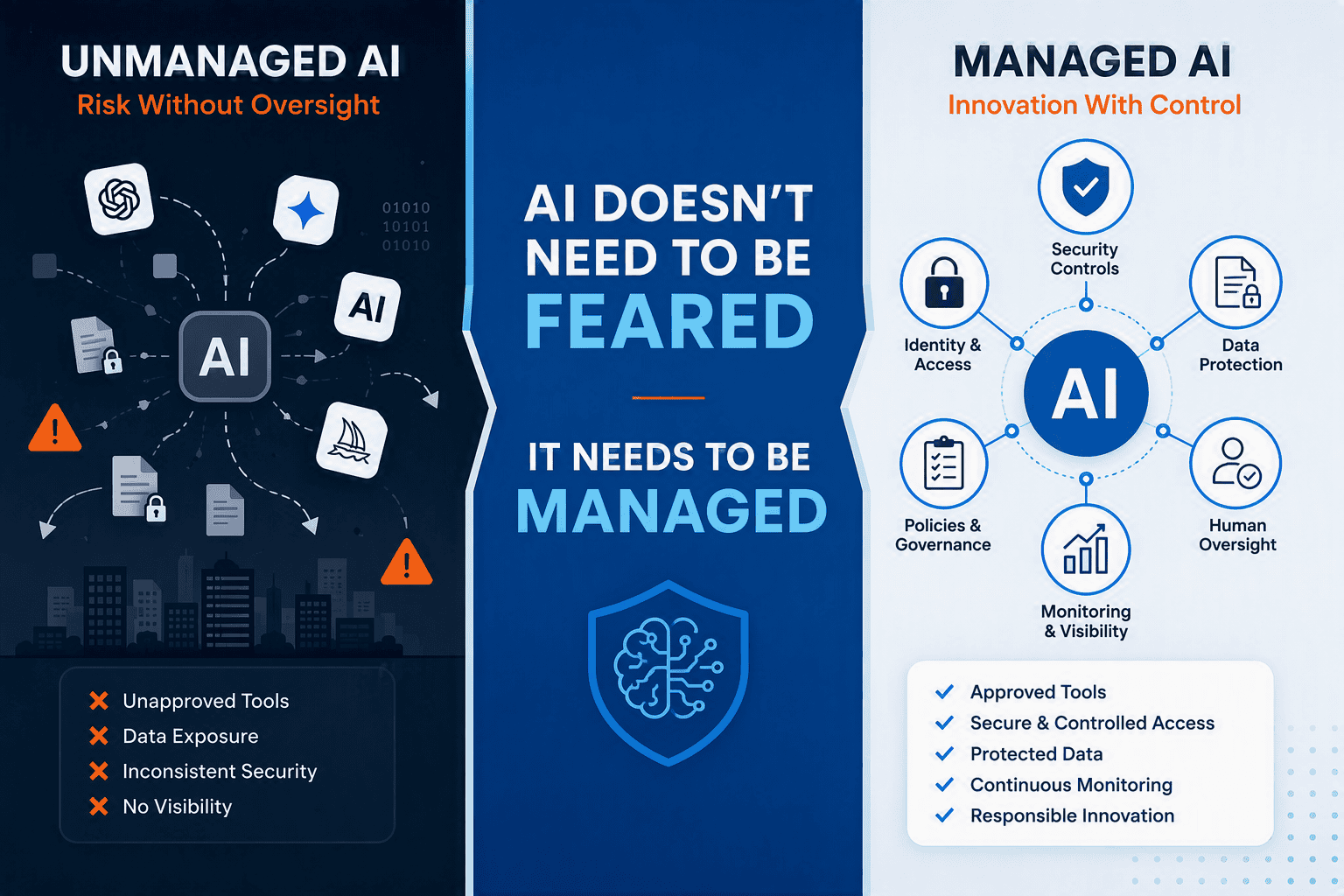
In many proposals, cybersecurity appears as an optional line item. That framing suggests you buy security once the budget allows. In practice, the safest environments are those where security shapes every decision from the start: how devices are set up, how accounts are managed, and how backups are tested.
Ask a prospective partner to walk you through how security factors into a routine recommendation, such as adding a new office or moving files to the cloud. Their answer will show whether they build security into their approach or bolt it on afterward.
3. What Does Strategic Planning Actually Look Like With You?
Many providers offer a vCIO (virtual Chief Information Officer) service. The title alone doesn’t tell you much. What matters is whether someone sits down with your leadership team to plan where your technology needs to go and how to budget for it.
Ask to see what a typical planning cycle includes. True vCIO services should involve a technology roadmap tied to your business goals, regular business reviews, and help building a realistic budget. If the answer is a yearly check-in focused on renewals, that’s account management, not strategy.
4. How Do You Decide Which Products and Platforms To Recommend?
Some providers are tied to a particular set of products, which can shape their advice more than your needs do. That isn’t always a problem, but you should know where a recommendation comes from.
Ask whether the provider selects solutions based on how your organization operates or on a preferred ecosystem. ACC is vendor-agnostic, not vendor-neutral: we aren’t locked into one ecosystem, but we will still give you a clear recommendation. We’ll also tell you when an option introduces risk you don’t need, even if it’s the one you asked about.
5. How Will You Keep Us Informed, and How Clear Is Your Billing?
When business leaders describe frustrations with past IT providers, poor communication and confusing invoices come up again and again. Good intentions don’t fix either one; defined processes do.
Ask what regular reporting looks like, who your main point of contact will be, and how escalations work if an issue isn’t moving. Then ask how billing is structured and what would cause a bill to change.
A partner worth trusting should give you documented plans, straightforward invoices, and honest conversations about risk, priorities, and cost.
6. How Do You Help Us Stay Compliant and Audit-Ready?
If you’re in healthcare, financial services, insurance, legal, or local government, compliance is part of daily operations. Cyber insurance renewals increasingly require proof of specific controls. Passing a checklist once doesn’t mean your organization is secure; readiness is an ongoing effort.
Ask which standards guide the provider’s work. ACC’s approach incorporates the NIST (National Institute of Standards and Technology) framework and CIS (Center for Internet Security) controls, two widely used sets of security guidelines. Also ask how often risk is reassessed and how findings are reported to your leadership team.
7. What Happens on the Day Something Goes Wrong?
Every organization will eventually face an outage, a hardware failure, or a security event. The question isn’t whether, but how well your partner leads you through it.
Ask the provider to describe its response process from first alert to full recovery.
- Who is in charge?
- How often are backups tested, and how long would it realistically take to restore your critical systems?
- Is someone watching for threats around the clock?
Look for clear answers and a calm, steady plan, not promises that nothing will ever happen.
8. How Long Do Your Clients Stay With You, and Why?
Any provider can make promises in a proposal. Retention shows whether those promises hold up over years of real work. Ask for average client tenure, how long the company has served the region, and how reliable client environments have been.
For context, ACC has an average client retention rate of 12+ years, supports clients with 99% uptime across managed environments, and works with nearly 250 businesses throughout Central and Upstate New York. Numbers like these don’t replace a good conversation, but they show whether a provider’s clients choose to stay.
Finding the Right IT Strategy Partner
The best questions to ask IT vendors aren’t about tools or monthly rates. They’re about responsibility, transparency, and whether a provider will still be invested in your success years from now. A partner who welcomes these managed services questions and answers them plainly is one worth getting to know.
If you’d like to talk through any of these questions with our team, call ACC at 315-484-4500 ext. 3.