

Technology plays a role in nearly every aspect of business today, from communication and collaboration to customer service, operations, and financial management. Yet many Central New York organizations still approach security reactively, addressing issues only after a problem occurs.
A security-first approach is different.
Rather than treating cybersecurity as a separate project or a collection of tools, a security-first mindset considers security in every technology decision from the start. It’s about reducing risk, protecting critical data, and ensuring your organization can continue operating when unexpected events occur.
For businesses that rely on Microsoft 365, cloud applications, remote work, or handle sensitive information, security is no longer something that can be added later. It must be built into the foundation.
What Does Security-First Mean?
A security-first approach means evaluating technology decisions through the lens of security, risk, and business impact before implementation.
This includes:
- Managing who has access to systems and data
- Securing Microsoft 365 and cloud environments
- Protecting devices and endpoints
- Backing up critical business data
- Preparing for business disruptions
- Monitoring and addressing security risks on an ongoing basis
Security-first is not about restricting productivity. It’s about creating an environment where technology can support business safely and reliably.
Why Traditional Security Approaches Fall Short
Many organizations assume they’re secure because they have antivirus software, a firewall, or backups in place.
While those tools are important, they only address part of the problem. In fact, the human element, whether through error, phishing, or misuse, was involved in roughly 60% of breaches, according to Verizon’s 2025 Data Breach Investigations Report, and stolen credentials remained the single most common way attackers got in. Today’s cyber incidents often involve compromised accounts, phishing attacks, unauthorized access, misconfigured cloud services, or human error. In many cases, attackers don’t “hack” their way in, they simply take advantage of existing gaps. A security-first strategy focuses on identifying and reducing those risks before they become business disruptions. Staying informed about emerging threats can help organizations identify and address vulnerabilities before they are exploited.
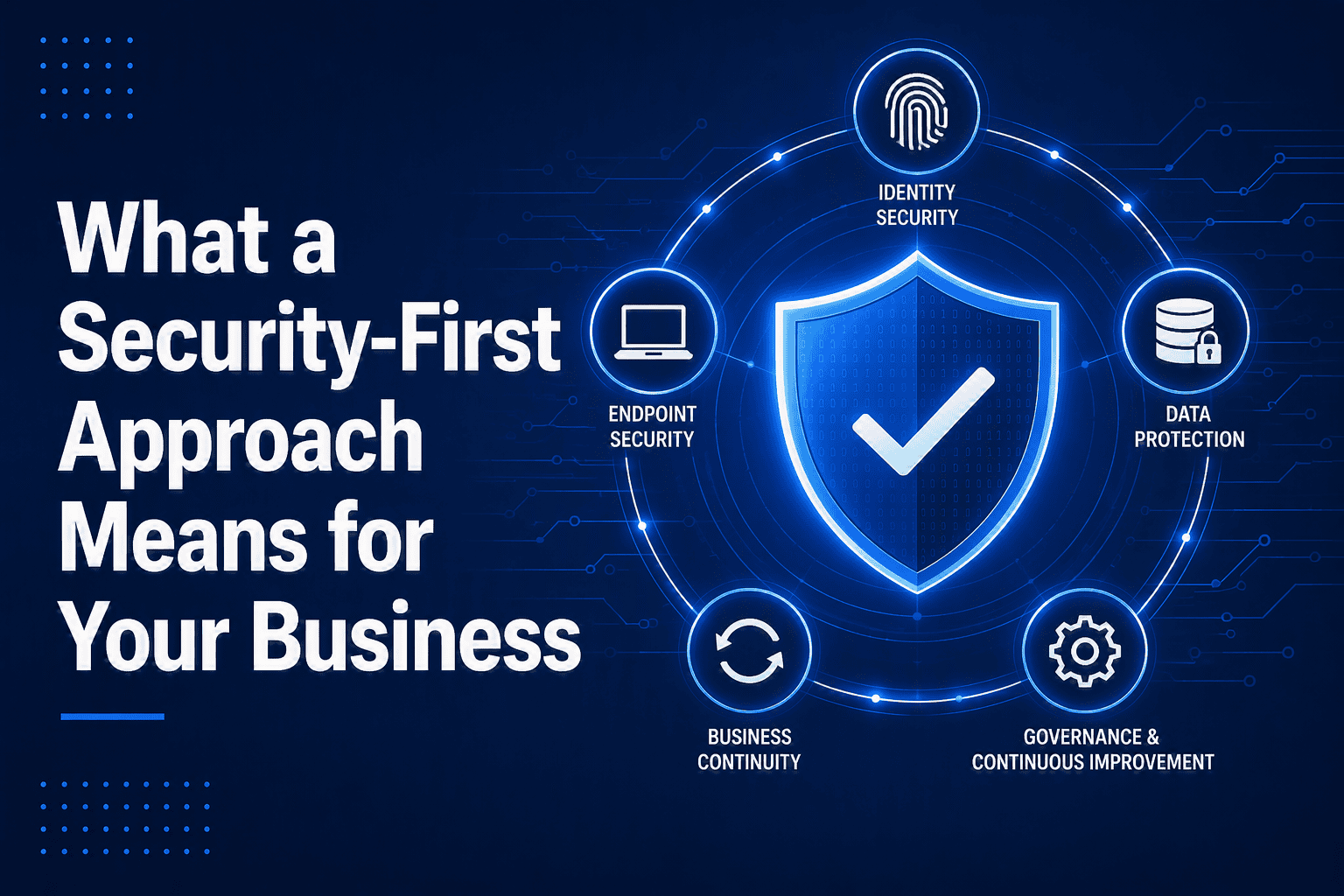
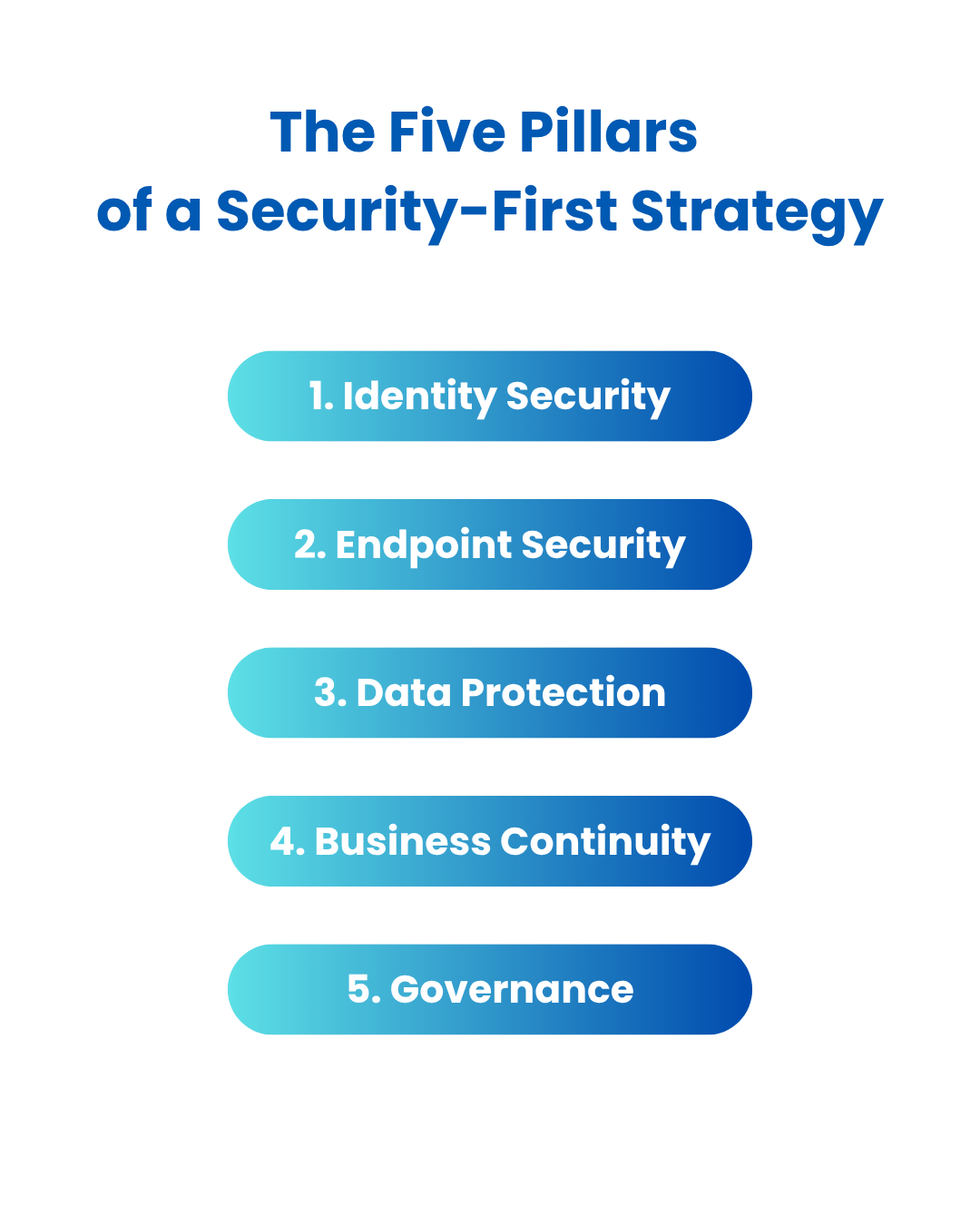
The Five Pillars of a Security-First Strategy
1. Identity Security
Identity is now one of the most important aspects of cybersecurity. Protecting user accounts through multi-factor authentication (MFA), access reviews, conditional access policies, and proper account management help reduce the risk of unauthorized access.
For organizations using Microsoft 365, protecting user identities is often one of the most effective ways to strengthen overall security.
2. Endpoint Security
Every laptop, desktop, mobile device, server, and other device connected to your environment can impact your security posture.
A security-first organization ensures devices are:
- Regularly updated
- Properly monitored
- Protected against threats
- Managed consistently
The goal is to reduce vulnerabilities while maintaining visibility across the environment.
3. Data Protection
Businesses generate and store significant amounts of sensitive information.
A security-first approach focuses on understanding:
- Where data is stored
- Who can access it
- How it is shared
- How it is protected
This includes securing files within Microsoft 365, implementing appropriate sharing controls, and ensuring data can be recovered when needed.
4. Business Continuity
Security isn’t just about prevention. It’s also about recovery. Many organizations have backups but have never tested whether they can successfully restore systems after an outage, ransomware incident, or accidental deletion.
A security-first strategy includes:
- Backup protection
- Disaster recovery planning
- Recovery testing
- Downtime reduction strategies
The goal is to ensure the business can continue operating when disruptions occur.
5. Governance and Continuous Improvement
Cybersecurity is not a one-time project. Threats, technologies, business processes, and compliance requirements change constantly.
Security-first organizations regularly:
- Assess risks
- Review policies
- Evaluate security controls
- Update procedures
- Improve processes
This ongoing attention helps maintain security over time rather than relying on periodic fixes.
What Security-First Organizations Do Differently
Organizations that successfully adopt a security-first mindset typically:
- Review technology decisions through a risk lens
- Actively manage Microsoft 365 and cloud security settings
- Regularly assess user access and permissions
- Test backup and recovery processes
- Provide employee security awareness training
- Align security efforts with business goals
- Continuously evaluate and improve their environment
Most importantly, they recognize that cybersecurity is a business issue, not just an IT issue.
How to Get Started
You don’t need to overhaul your entire environment overnight. For most organizations, the first step is to understand where risks currently exist.
A structured IT and security assessment can help identify:
- Security gaps
- Microsoft 365 risks
- Access control issues
- Backup and recovery concerns
- Compliance challenges
- Opportunities to improve resilience
From there, improvements can be prioritized based on business impact and risk.
Security First Is About More Than Technology
A security-first mindset isn’t about adding more tools. It’s about making better decisions.
When security is considered early, businesses are better prepared to protect their data, support compliance requirements, reduce downtime, and adapt to future challenges.
The result is a more resilient organization that can confidently use technology to support growth and long-term success.
Ready to See Where Your Risks Are?A structured IT & Security Assessment helps you pinpoint gaps, confirm what’s already working, and prioritize improvements based on real business impact. Schedule a complimentary IT & Security Assessment by emailing us at salescentral@acctek.com. |
Frequently Asked Questions
What is a security-first approach?
A security-first approach means considering security, risk, and business continuity before making technology decisions rather than addressing those concerns after implementation.
Why is a security-first mindset important?
A security-first mindset is important because it helps reduce business risk, protect sensitive information, support compliance efforts, and improve resilience against cyber incidents and operational disruptions.
Is security-first only about cybersecurity tools?
No, security-first is not only about cybersecurity tools. A security-first strategy also includes processes, policies, employee awareness, identity management, backup and recovery planning, and ongoing risk management.
How does Microsoft 365 support a security-first strategy?
Microsoft 365 supports a security-first strategy by including security, identity, device management, compliance, and threat protection capabilities that can help organizations strengthen their overall security posture when properly configured and managed.
What’s the difference between reactive IT and security-first IT?
Reactive IT responds to problems after they occur. Security-first IT focuses on reducing risk and preventing issues before they impact the business.